Small camping spaces don’t fall apart because families are careless. They fall apart because there is no system strong enough to survive daily use. When you’re living out of an SUV, teardrop camper, or truck setup, every item is touched multiple times a day. Shoes come off, food gets cooked, kids grab gear, and everything moves constantly. Without a structure that resets itself daily, mess builds faster than anyone can keep up with. Most families try to “stay organized” by reminding kids to clean up, stacking bins, or doing one big reset at night. That approach rarely works long-term. The problem isn’t effort- it’s that the space isn’t designed to stay functional under real life. This post solves that. The goal here isn’t perfection. It’s creating a system that naturally resets itself, teaches responsibility through use, and works just as well at home as it does at camp.
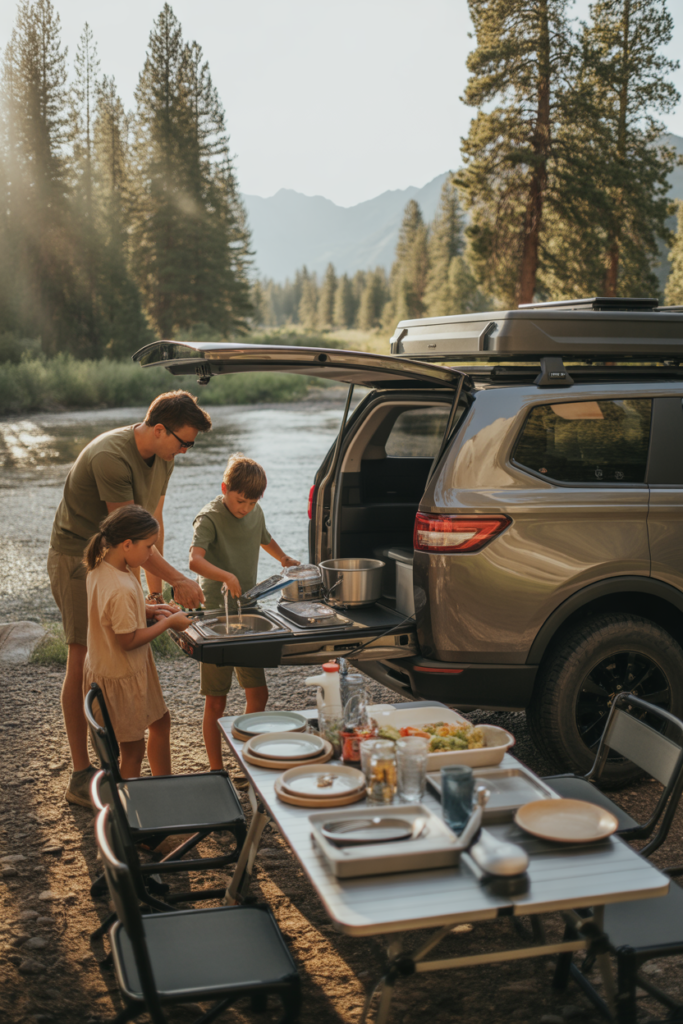
How Do You Avoid a Small Camping Space Getting Messy?
You don’t avoid mess by cleaning more. You avoid a mess by limiting decision-making.
Small spaces get messy when:
- Items don’t have a fixed home
- Multiple people share the same gear
- Cleanup requires too many steps
1. One-Touch Rule for Gear
- Shoes go directly into one bin
- Dishes go directly into a wash system
- Jackets go to one hook or one bag
2. Visible Storage Beats Hidden Storage
- Open Drawers
- Slide-out systems
- Clear bins with a single purpose
3. Fewer Categories, Not More
- “Camp kitchen “
- “Snack bin”
- “Breakfast bin”
- “Dinner bin”
Uses:
- Food
- Cooking
- Cleaning
Why This Works For Kids:
- The system is simple
- The expectation is clear
- The result is immediate
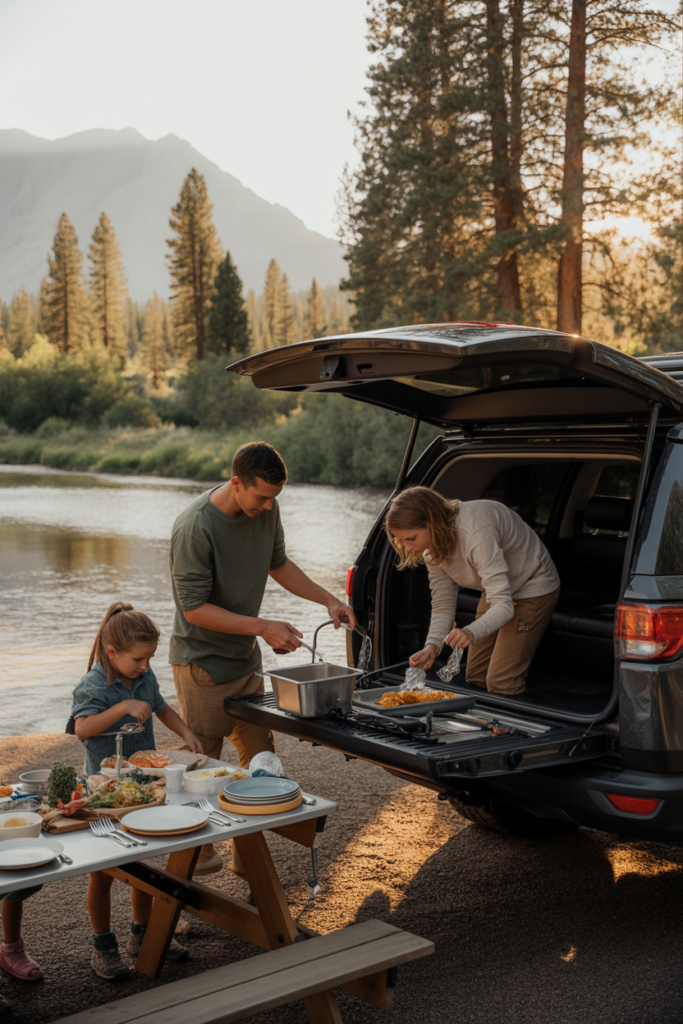
Why Does Clutter Build So Fast-and How Do You Stop It
In Shared family spaces, especially while camping:
- No one knows whose job it is
- Everyone assumes someone else will handle it
- Parents become the default to do
The Real Cause of Camping Clutter
Clutter isn’t stuff-it’s unassigned responsibility
If No One Owns:
- The kitchen reset
- The shoe area
- The food drawer
- The trash system
Then everything slowly spreads.
The Fix: Assign Systems, Not Chores
Instead of saying:
- Clean up
- Help your brother or sister
- Put your stuff away
You design systems where:
- Each child owns a zone or area
- Each zone or area resets daily
- The reset takes less than five minutes
Why This Transfers To Real Life:
This works at camp because it’s visible. At home, the same principles applies:
- Backpack storage
- Kitchen counters
- Entryways
- Shared bedrooms
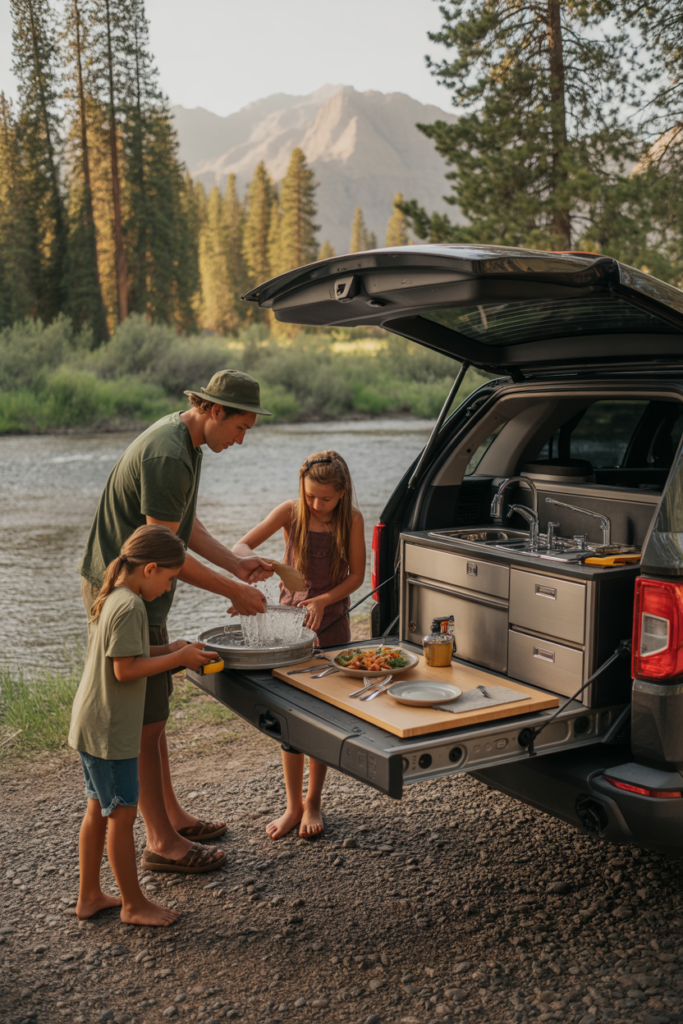
What Daily Systems Can Be Reset Without Stress or Conflict?
The Three Systems Every Small Camping Space Needs
- The Cooking System
- One prep surface
- One drawer for utensils
- One bin for food is in use
After dinner:
- Everything returns to it’s original spot
- No sorting
- No decisions
2. The Cleanup
- Slide-out drawer with sink and stove
- One wash bin
- One dry bin
3. The Night Reset System
- Shoes in one place
- Food sealed
- Trash taken out
- Table cleared and cleaned
Why Reset Systems Matter More Than Deep Cleaning
Deep cleaning happens occasionally, but a reset happens daily. When kids see that spaces return to their spot every night, they internalize order without being lectured or asked. They begin to notice when something is out of place and fix it themselves without being asked.
Order Isn’t About Control-It’s About Freedom
A well-organized camping setup doesn’t feel rigid. It feels light. When every item has a place, and every person has a role, the space stops demanding attention. Meals become smoother, mornings start calmer, and evenings end without tension. The same systems that keep a small camping space functional also work at home, on road trips, and in daily life. Order doesn’t come from effort, it comes from systems that match real human behavior, especially with kids.