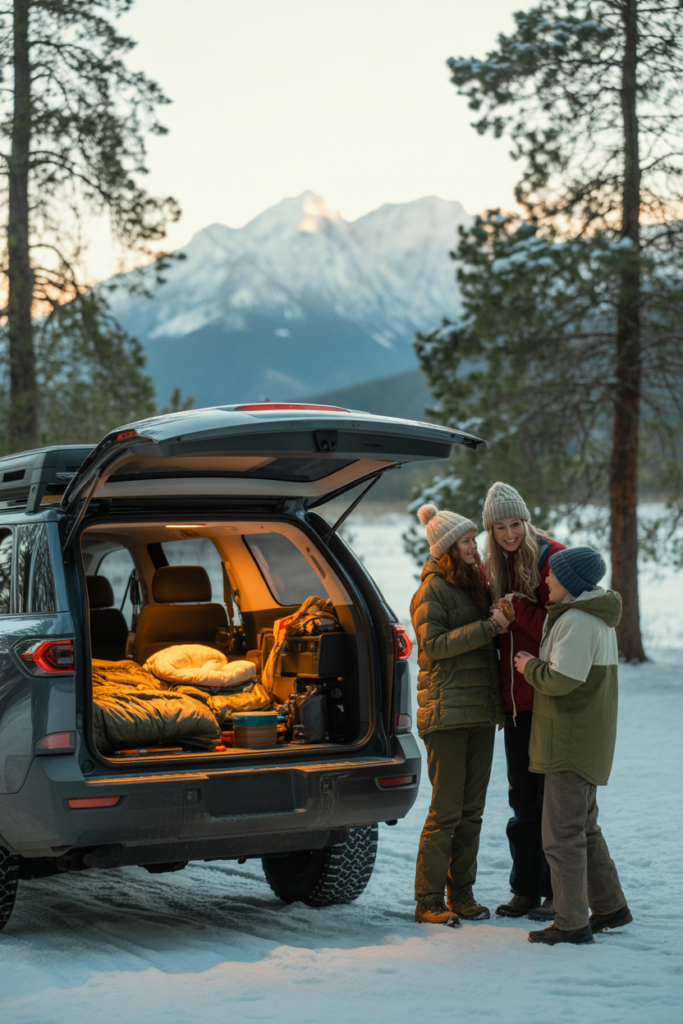
Cold-weather car camping can feel intimidating, especially if you’re new to camping in the winter or planning your first SUV setup. Most people assume winter camping requires extreme gear or expert skills, but the reality is simpler: success comes from understanding warmth, insulation, and preparation.
This beginner-friendly cold-weather car camping gear list focuses on what actually matters when temperatures drop. It strips away unnecessary complexity and helps you build a practical setup that keeps you warm, organized, and confident without overpacking or guessing.
What “Cold Weather” Actually Means for Car Camping
- Temperatures drop faster at night than expected
- Wind and moisture increase heat loss
- Vehicles trap condensation in cold conditions
- Elevation and shade dramatically affect warmth
- Comfort margins shrink compared to summer camping
Cold-weather car camping isn’t just about outside temperatures; it’s about how cold it behaves inside your vehicle. Once the sun goes down, metal, glass, and airflow pull heat away quickly. Even mild winter nights can feel harsh without the right preparation. Understanding this shift helps beginners avoid the most common mistake: treating cold-weather camping like extended fall camping. Winter requires intentional warmth management, not just “more layers”.
The Minimum Gear You Need to Camp Below Freezing
- Insulated sleeping gear
- Ground and floor insulation
- Moisture control items
- Cold-weather clothing layers
- Simple ways for retaining heat
At its core, winter car camping is about retaining heat, not generating it. Your gear should work together as a system- each layer preventing warmth from escaping while blocking cold from entering. Beginners often focus only on sleeping bags, but cold enters from below, through windows, and damp air. This minimum gear list creates a thermal buffer around your body and inside your vehicle so warmth lasts through the night.
Core Sleeping System Gear for Cold Nights
- Temperature-appropriate sleep insulation clothing
- Insulated sleeping surface
- Additional top layers for heat retention
- Breathable barriers to manage moisture
Your sleeping system is the single most important part of cold-weather car camping. Warmth is lost fastest when your body compresses insulation underneath you, making surface insulation just as critical as what’s on top. A well-built sleep setup maintains consistent warmth, reduces wake-ups, and prevents the cold from below effect that surprises many first-timers. Moisture control is equally important trapped condensation can make even warm insulation feel useless by morning.
Ground, Floor, and Vehicle Insulation Essentials
- Floor insulation between you and the vehicle
- Window insulation to reduce radiant heat loss
- Door and hatch draft covers
- Insulation layers that are removable and flexible
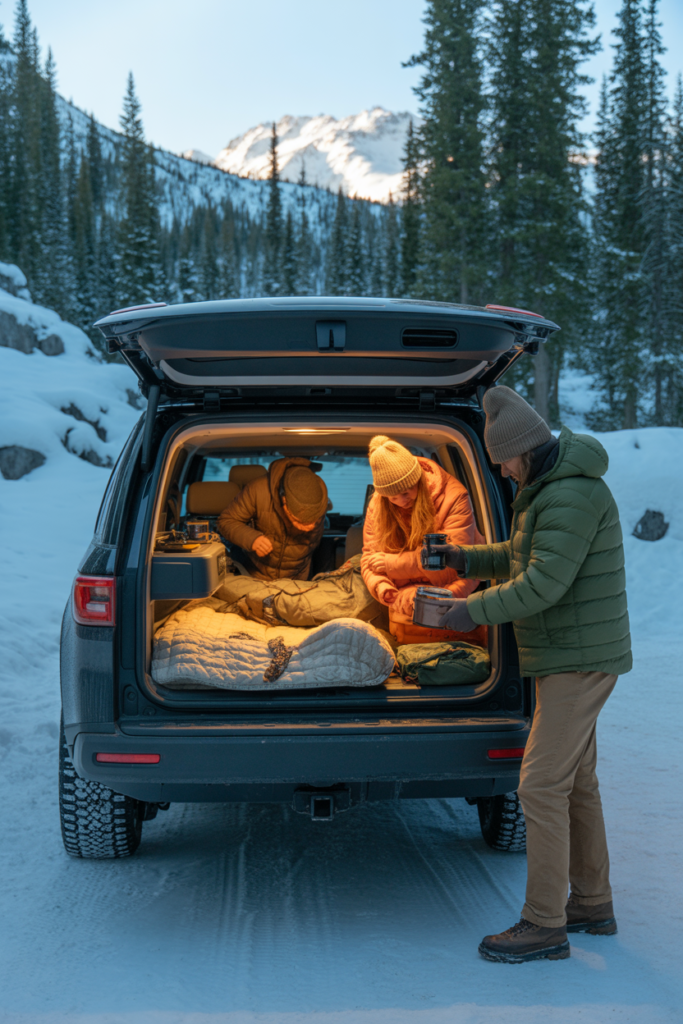
SUVs offer space, but they also contain large glass areas that radiate cold. Insulating your vehicle creates a warmer microclimate and reduces how hard your sleeping system has to work. Beginners often underestimate how much cold comes from the vehicle itself. Simple insulation strategies dramatically improve comfort without adding bulk or complexity to your setup.
SUV-Specific Gear That Makes Winter Easier
- Space-efficient storage
- Vertical organization to reduce clutter
- Gear zones for warmth, sleep, and access to your needs effectively
- Quick-access to cold-weather essentials
SUV campers benefit from height and cargo flexibility, but winter gear takes more space than summer setups. Organization becomes a warm strategy; less rummaging means less cold air entering your sleeping area. A clean, intentional layout keeps essential items within reach, reduces nighttime movement, and helps maintain warmth once you’re settled in for the night.
Moisture & Condensation Control
- Ventilation for airflow
- Absorbent materials for damp air
- Barriers between wet and dry clothing and shoes
- Breathable storage bags or bins
Condensation is one of the most overlooked challenges in cold-weather car camping. Warm air inside your vehicle meets cold surfaces and turns into moisture, often soaking bedding, windows, and clothing overnight. Managing moisture protects your insulation, keeps your sleeping area dry, and prevents that clammy feeling that makes a cold night uncomfortable. Proper airflow doesn’t make your vehicle colder; it makes it drier and warmer long term.
Clothing Layers You Need Inside the Vehicle
- Base layers for consistent warmth
- Dedicated sleep clothing
- Accessories for your head, hands, and feet
- Insulating layers for heat retention
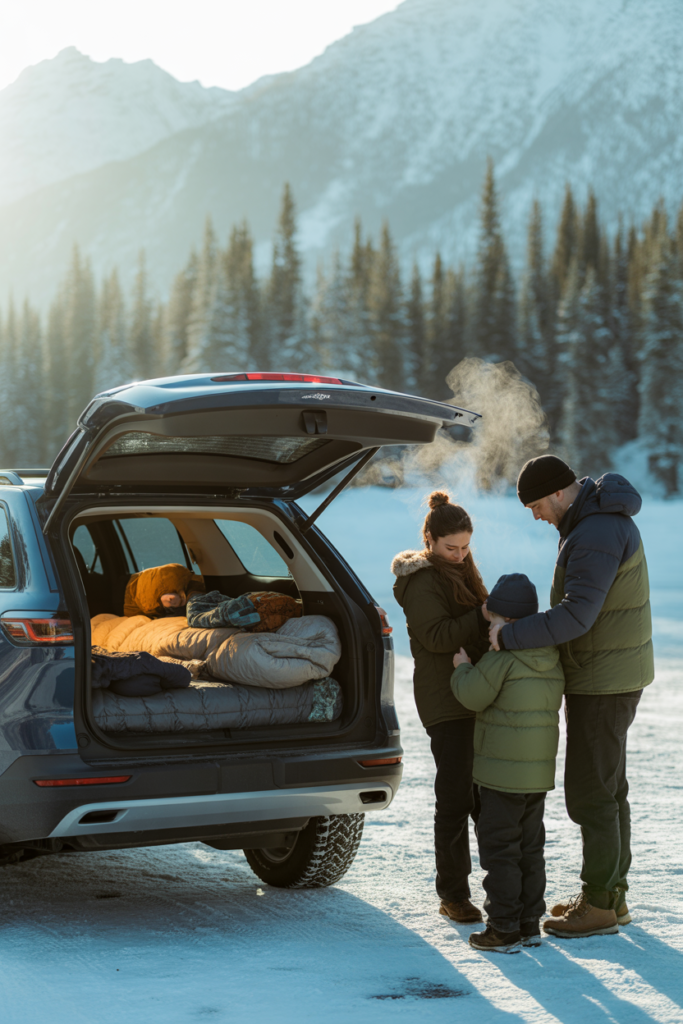
What you wear inside your vehicle matters just as much as your bedding. Cold weather camping requires clothing that works with your sleeping, not against it. Dedicated sleep layers prevent moisture buildup from daytime wear and allow your body heat to stay where it’s needed. Extremities lose heat fastest, making coverage and insulation critical for overall comfort.
Safe Heat & Warmth Add-Ons for Car Camping
- Backup warm options (Blankets, heated jackets, Insulated snow pants)
- Heat storage methods
- Hand warmers
- Heat source (propane heater, electric blanket)
Simple warmth add-ons extend comfort through the coldest hours of the night and provide peace of mind if temperatures drop unexpectedly. Safety and ventilation always come first in enclosed vehicle setups. Beginner winter campers often search for active heat solutions, but passive warmth is safer and more reliable.
Budget-Friendly Winter Gear Swaps That Still Work
- Multipurpose insulation items
- Layered systems instead of single solutions
- Reusable items throughout different seasons
Winter camping doesn’t require expensive or specialized gear to be effective. Many warm strategies rely on layering, smart material choices, and dual-purpose items. For beginners, this approach lowers the barrier to entry and allows gradual upgrades over time.