The first time we tried to replicate “normal school” while traveling, it failed quietly. We had arrived at a mountain town after a long drive. The landscape was dramatic-elevation shifts, winding roads, and pine forests. The environment itself was rich with learning opportunities. Yet we sat at a table attempting to complete worksheets simply because it felt responsible. The tension wasn’t about discipline. It was about a mismatch. Traditional school systems are built on fixed environments. Travel is defined by environmental change. When you attempt to impose rigidity on fluidity, resistance follows not because children reject learning, but because the structure conflicts with context.
That realization reframed everything. Travel is not a disruption of education. It is a high-density educational environment. But it requires a different architecture, one built on rhythm instead of rigidity, integration instead of separation, and reflection instead of repetition. When designed intentionally, travel develops mathematical reasoning, reading comprehension, and reflection instead of repetition.
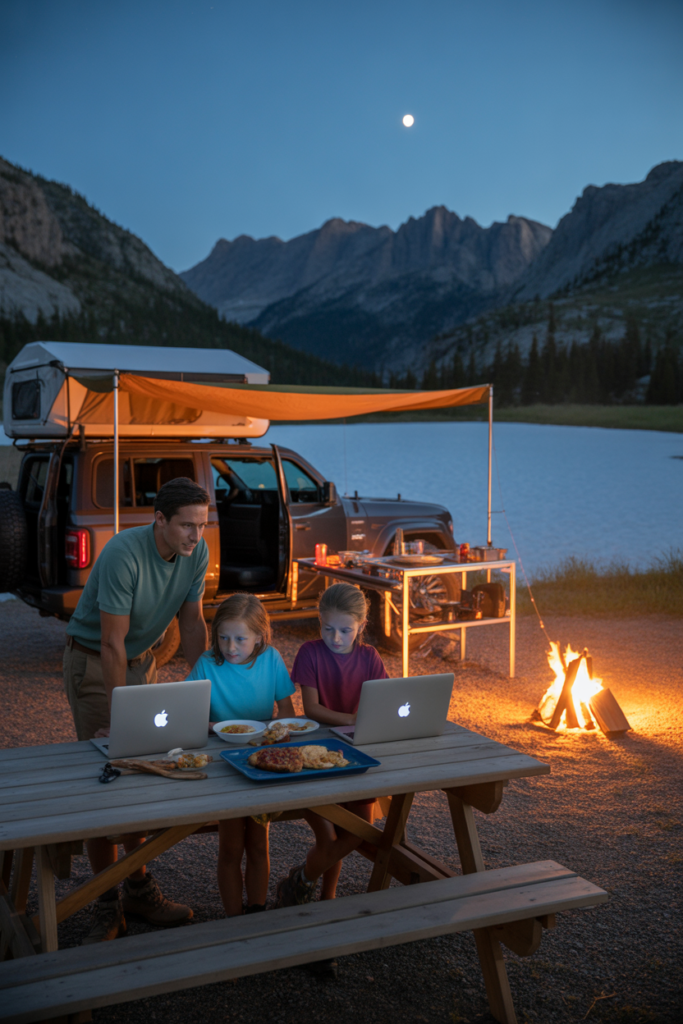
Why Nomad Families Require Educational Rhythm Instead of Firm Scheduling.
Firm Schedules depend on environmental predictability. Classrooms operate under controlled timing, standardized pacing, and consistent physical surroundings. Travel dissolved those controls. Road closures, weather shifts, extended drives, and spontaneous opportunities are not exceptions in normal life. They are constant. Attempting to preserve fixed hourly instruction within this variability produces stress. Children sense urgency. Parents feel behind. Learning becomes compliance rather than curiosity.
Rhythm solves this:
Rhythm establishes non-negotiables without fixing them to specific hours. It defines what must occur each day, while allowing flexibility in when and how it occurs. Core academic reinforcement happens daily. Experience-based exploration happens daily. Reflection happens daily. For parents, rhythm removes guilt. For children, it maintains stability. For the family system, it reduces friction. Structure remains intact. Rigidity dissolves.

Three-Phase Learning Flow That Adapts to Any Destination
Foundational Skill Reinforcement:
Every child requires ongoing development in core learning skills. Mathematics, Reading, Writing. Travel does not eliminate that need. It enhances its application.
- Mathematics: becomes applied analysis rather than abstract repetition. Calculating fuel efficiency, comparing regional pricing, and estimating travel time based on distance and terrain are authentic exercises in arithmetic, ratios, and logical reasoning.
- Reading: evolves beyond assigned passages. Kids can interpret trail maps, museum placards, historical markers, and informational guides. Comprehension deepens because the information carries immediate relevance.
- Writing: transitions from academic obligation to documentation. Journals, reflections, comparative notes between regions, or short analytical summaries strengthen articulation and memory retention.
Integrated Experience-Based Exploration:
Travel compresses multiple disciplines into singular experiences.
Standing in a historic settlement engages history and geography simultaneously. Why was this location chosen? What natural resources shaped its economy? What political decisions influenced its development? How did terrain affect defense or trade? A coastal environment introduces scientific inquiry through tidal patterns, marine ecosystems, and erosion. Geography becomes visible in shoreline formation. Math surfaces through estimating distances between landmarks or analyzing depth markers. The educational value emerges when families shift from passive sightseeing to structured inquiry. Travel stops being observational. It becomes analytical.
Reflection and Cognitive Integration:
Experience alone does not guarantee learning. Integration does.
Reflection strengthens neural encoding. When kids articulate what they observed, compare it to prior knowledge, or draw connections between regions, they solidify understanding. Reflection can take multiple forms, such as written analysis, oral discussion, visual sketching, or comparative mapping. The medium matters less than the act of synthesis. From a child’s perspective, it builds confidence in articulation and critical thinking. Without reflection, travel entertains. With reflection, it educates.
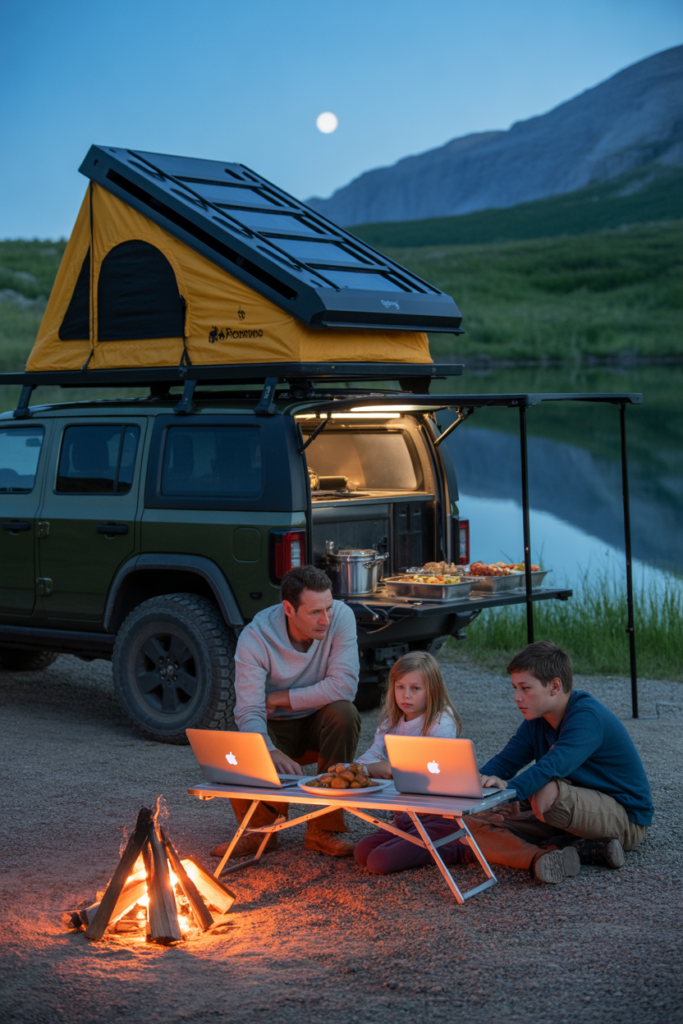
Preventing Parent Burnout Through Focus and Intentional Observation
Excess possibility can overwhelm even motivated parents. Without a guiding eye, every location demands attention from every subject area.
Focus simplifies attention:
- Geography: A centered period sharpens awareness of terrain, climate zones, infrastructure patterns, and regional resource distribution.
- History: A centered period emphasizes settlement patterns, economic shifts, cultural traditions, and political influences.
- Science: A centered focus highlights ecosystems, environmental adaptation, biodiversity, and geological change.
- Financial: A literacy focus integrates budgeting, cost comparison, and economic trade-offs into daily decisions.
Themes organize cognition. They do not confine it. Kids begin to notice patterns independently because attention has been directed intentionally. Parents conserve mental energy because decision-making becomes more structured