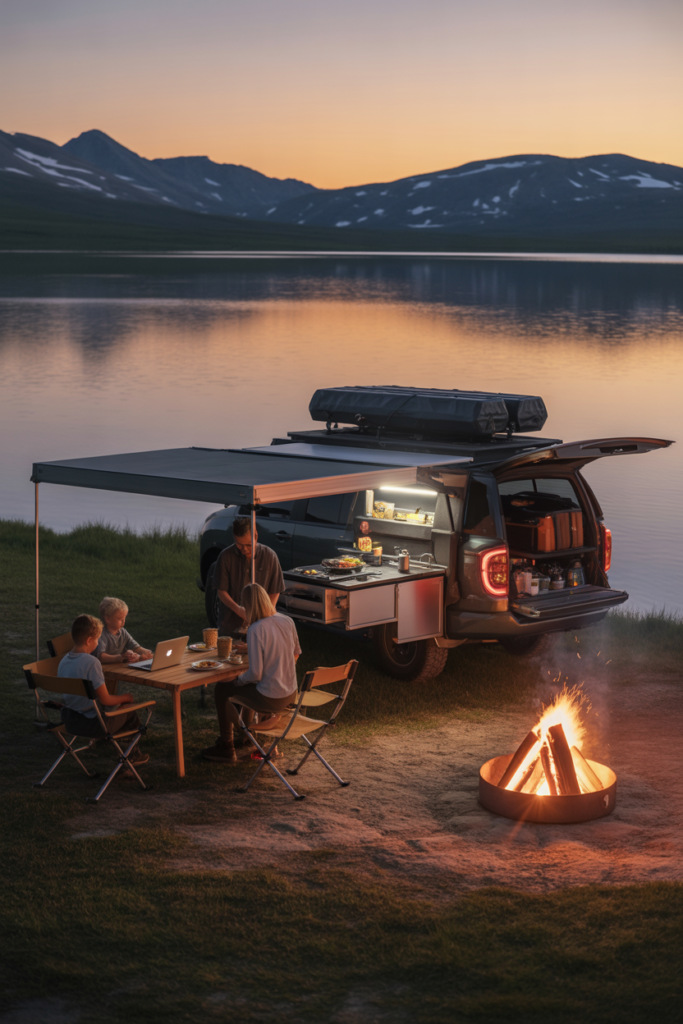
Travel doesn’t interrupt education-it transforms it.
Nomad families often worry that living on the road means falling behind. But the truth is, travel offers natural opportunities for math, reading, science, and life skills-when approached the right way. This guide shows how to make education fun, easy for parents, and meaningful for kids, while fitting seamlessly into your family’s adventures.
Adventure Learning-Education Everywhere
Most parents assume education only happens in books or classrooms.
But when you live a nomadic lifestyle, your curriculum is everywhere. Mountains, rivers, towns, and museums all become teaching tools for kids.
Observe First
Before teaching, pause and explore:
- What’s unique about this location?
- What questions are my kids asking naturally?
- What patterns or phenomena do we notice?
Observation sparks curiosity, which drives learning to a new level.
Ask Guiding Questions
Instead of lecturing, ask questions like:
- Why do trees grow differently in other areas?
- How does this town’s location near water impact its history?
- What adaptations do animals make to survive here?
This encourages kids to think and wonder about the how and why.
Connect to Core Skills
Every adventure can tie back to:
- Math – estimating distance, calculating time, budgeting
- Reading – signs, maps, research materials
- Science – cause/effect, ecosystems, geology
- Life skills – planning, responsibilities, leadership
The Environment becomes a living classroom.
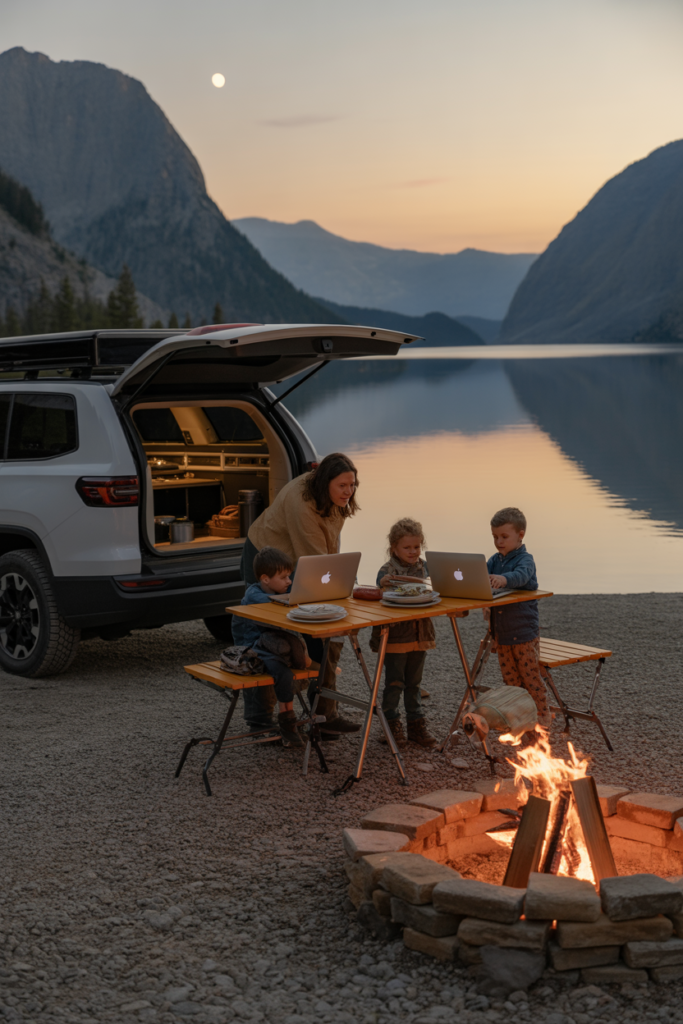
Math, Reading, and Science
Kids disengage when learning feels abstract. Replace worksheets with real-life problem solving and fun challenges.
Travel Math That Works
- Calculate the remaining miles to the next stop.
- Estimate elevation gain during a hike.
- Track spending and budget for meals and activities.
Older kids can tackle:
- Converting miles to kilometers
- Average speed calculations
- Comparing tax or price differences between states
Reading With Purpose
When reading serves a purpose, kids pay attention:
- Campground maps
- Local history signs
- Restaurant menus
- Travel guides
Have your child:
- Summarize what they read
- Identify new words
- Tell the family what they read
Science That Sparks Curiosity
Science is everywhere:
- Why does the river curve here?
- Why are some insects only active at dusk?
- Why do rock layers have stripes?
Encourage:
- Sketching observations
- Comparing multiple locations
- Tracking weather patterns
Science becomes investigation, not memorization
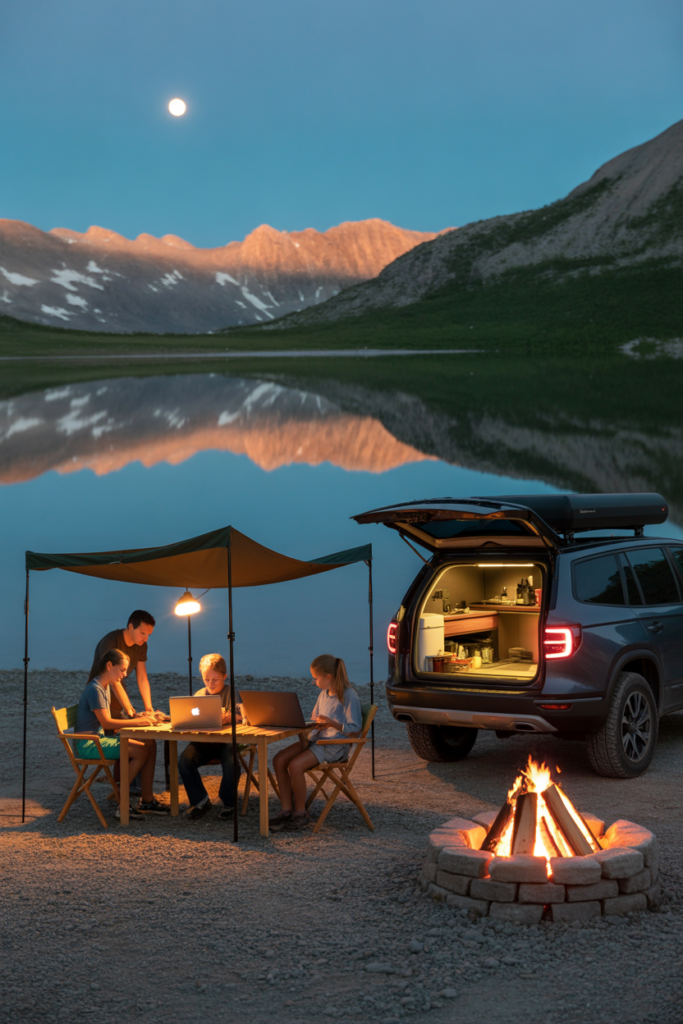
Prevent Burnout With a Simple Rotation System
Even exciting learning can become repetitive. Rotate focus each day to maintain curiosity:
- Monday: Navigation & Reading maps
- Tuesday: Focus on Nature Science
- Wednesday: Movements with Math
- Thursday: Writing and Journaling
- Friday: Leadership and Responsibility
Rotation reduces fatigue for both kids and parents and builds a predictable rhythm without rigidity.
Why Rotation Works
- It reduces overplanning stress
- Keeps kids engaged
- It builds consistency
- Allows flexibility on travel-heavy days