Winter travel with kids requires a different level of preparation. Cold temperatures, shorter daylight, and limited access to supplies mean that mistakes aren’t just inconvenient; they can be unsafe. Families living or traveling in an SUV during winter must plan intentionally for food storage, electricity, sleeping warmth, daily activity, and clothing systems that work in freezing conditions.
This post outlines exactly what families need to stay safe, warm, and comfortable while enjoying winter environments. Whether you’re parked in the mountains, snow camping, or traveling between cold-weather destinations, these essentials form a reliable winter system.
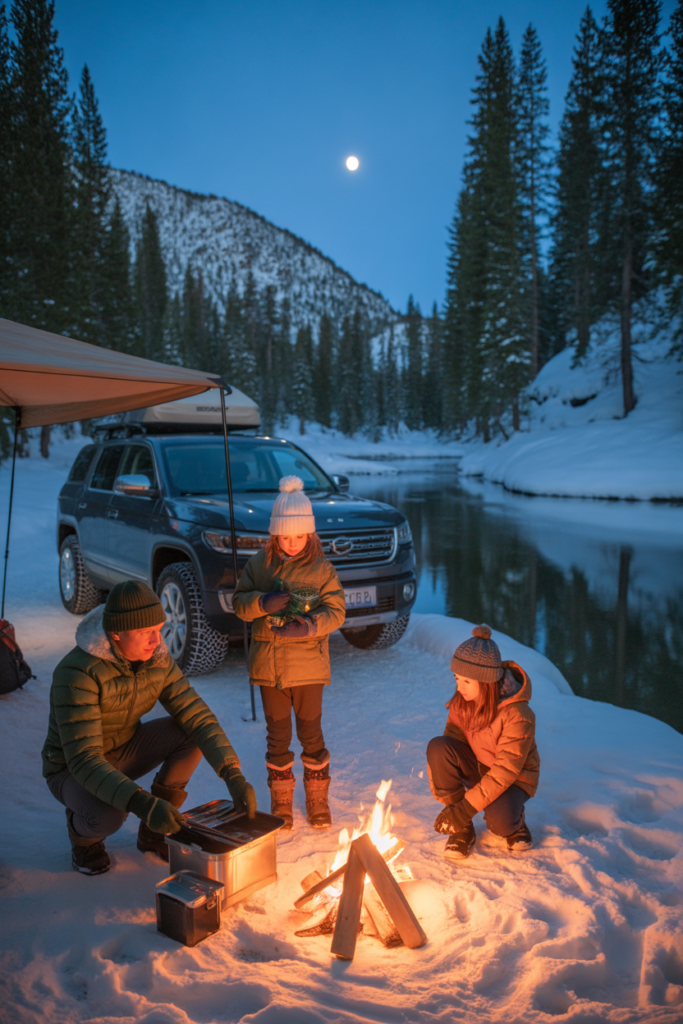
Winter Food Storage and Cooking Essentials for Families
Winter changes the way families relate to food. Cold temperatures increase calorie needs, reduce appetite in kids, and even make simple meals feel harder to prepare. When food isn’t accessible, warm, or planned properly, stress rises quickly, especially for children who rely on routine. For families traveling or living in an SUV during winter, food isn’t just nourishment; it’s comfort, warmth, and emotional support. A hot meal can reset a cold, exhausted day. A warm drink can calm kids and signal safety when the environment feels harsh.
Planning winter food systems ahead of time reduces decision fatigue, conserves energy, and ensures that no one is skipping meals simply because it’s cold or inconvenient to cook. When food storage and cooking is dialed in, families spend less time reacting and more time enjoying where they are.
Food Essentials Checklist:
- High-calorie shelf-stable foods (nut butters, oats, rice, pasta, canned proteins)
- Freeze-resistant snacks for kids (trail mixes, protein bars rated for the cold)
- Insulated food containers
- Thermos bottles for hot meals and drinks
- Sealed bins to protect food from moisture and freezing temperatures
- Dedicated snack container accessible during the day
Cooking & Meal Management:
- Propane or diesel-compatible stove rated for winter use
- Winter guards for outdoor cooking
- Insulated cooking gloves
- Lid cookware to retain heat
- Backup no-cook meals for extreme cold days
- Hot drinks (tea, broth, hot chocolate
Key Winter Considerations:
- Avoid liquids that expand and freeze easily
- Plan meals that require minimal prep time
- Prioritize warm meals twice a day
- Store food inside an insulated lunch box or cooler
Power, Electricity, and Lighting for Winter SUV Living
Power becomes critical in the winter, not an option. Shorter daylight hours mean families spend more time inside their vehicle or shelter, relying on electricity for lighting, warmth, support, navigation, and communication. When power systems are not ready for use, families feel it immediately: dark interiors, dead devices, low battery levels, and limited ability to respond to emergencies. For kids, darkness and uncertainty can increase fear and restlessness. Reliable winter power planning creates psychological safety. Light extends the usable day. Charged devices provide connection and reassurance. Consistent electricity allows families to maintain routines even when the sun sets early.
In winter conditions, power systems must be built around redundancy and conservation, assuming that solar input may be minimal and access to charging may be limited. When families understand this ahead of time, they stop fighting the season and start working with it.
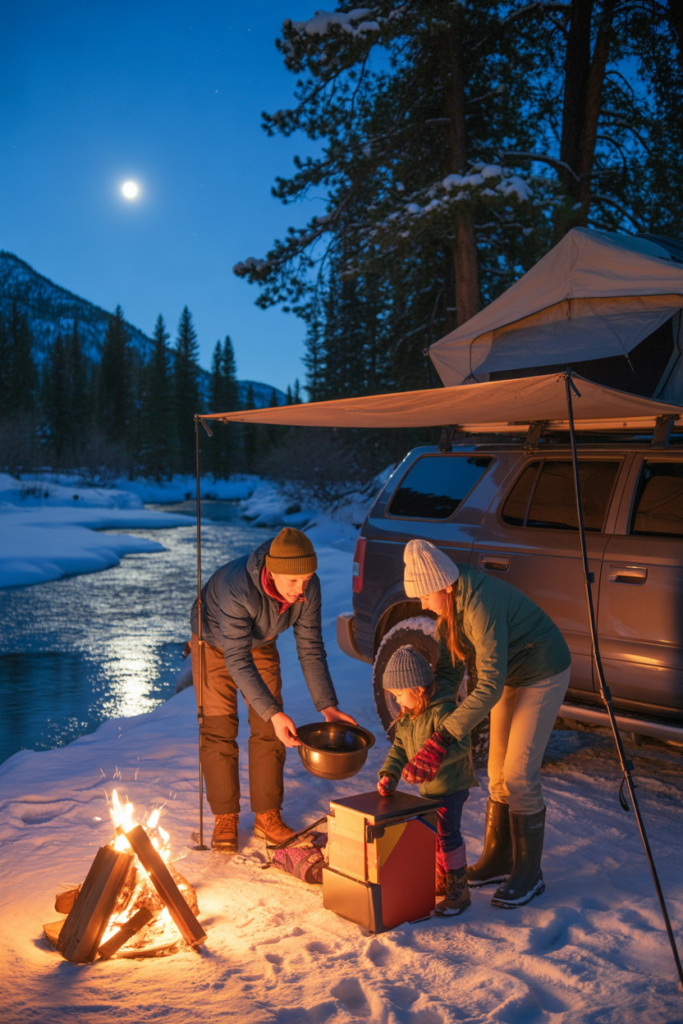
Winter reduces solar efficiency and increases electrical demand. Power planning must assume low sunlight and longer indoor time.
Power Essentials Checklist:
- Portable power station rated for cold temperatures
- Secondary backup battery or jump starter cables
- 12V fridge/freezer with cold-weather mode
- Insulated battery box or high cranking amp battery
- Low-draw LED lighting strips
- Headlamps for each family member
Power Management Priorities:
- Heating support systems
- Interior lighting during early sunsets
- Device charging for navigation and safety
- Fridge temperature controls
Winter Power Strategies:
- Charge batteries while driving whenever possible
- Reduce nonessential device usage
- Store batteries inside sleeping area at night
- Use timers for lights to conserve energy
Why this Matters: Loss of power in the winter impacts safety, heat, and communication. Redundancy is non-negotiable.
Sleeping in an SUV or Rooftop Tent (With Diesel Heater Setup)
Sleep is where winter travel succeeds or fails. Cold nights affect children faster than adults. Poor sleep leads to irritability, low energy, and decreased resilience the next day. For parents, worrying about warmth at night adds a mental load that never truly shuts off. A proper winter sleeping system isn’t about toughness; it’s about layered protection and control. When families know when they can sleep through the night, everything else becomes easier: mornings start calmer, kids are willing to engage the outdoors, and parents can rest without constant monitoring.
Diesel heaters, when used correctly and safely, provide consistent, dry heat that transforms winter nights from something to endure into something manageable. Combined with insulated sleeping layers and ventilation, they allow families to camp confidently in conditions that would otherwise be unsafe.
Nighttime temperatures are the highest risk period for families. Sleeping systems must be layered, insulated, and controllable.
Sleeping System Essentials:
- Cold-rated sleeping bags (rated at least 15 degrees below expected temperatures)
- Insulated sleeping pads with a high R-value of (4.5-8 and higher for extreme conditions)
- Wool or thermal mattress layers
- Fitted insulated sheets
- Separate sleep layers for kids to adjust to the temperatures
Rooftop Tent (RTT) Setup:
- Four-season rooftop tent or winter insulation liner
- Condensation-resistant ventilation
- Foam insulation under the mattress
- Wind blocking cover or skirt around your vehicle
Diesel Heater Essentials:
- External-mounted diesel heater unit
- Insulated hot air duct into your SUV or RTT
- Carbon monoxide detector
- Fire extinguisher
- Thermostat controler
- Dedicated fuel (propane, gas)
- Built-in noise reduction filters or a setup
Nighttime Warmth Management:
- Pre-heat your sleeping area before bedtime
- Shut down the heater during sleep if it safely insulated
- Keep the emergency blanket accessible
- Dress kids in dry base layers
Winter Clothing, Supplies, and Daytime Activity Essentials for Kids
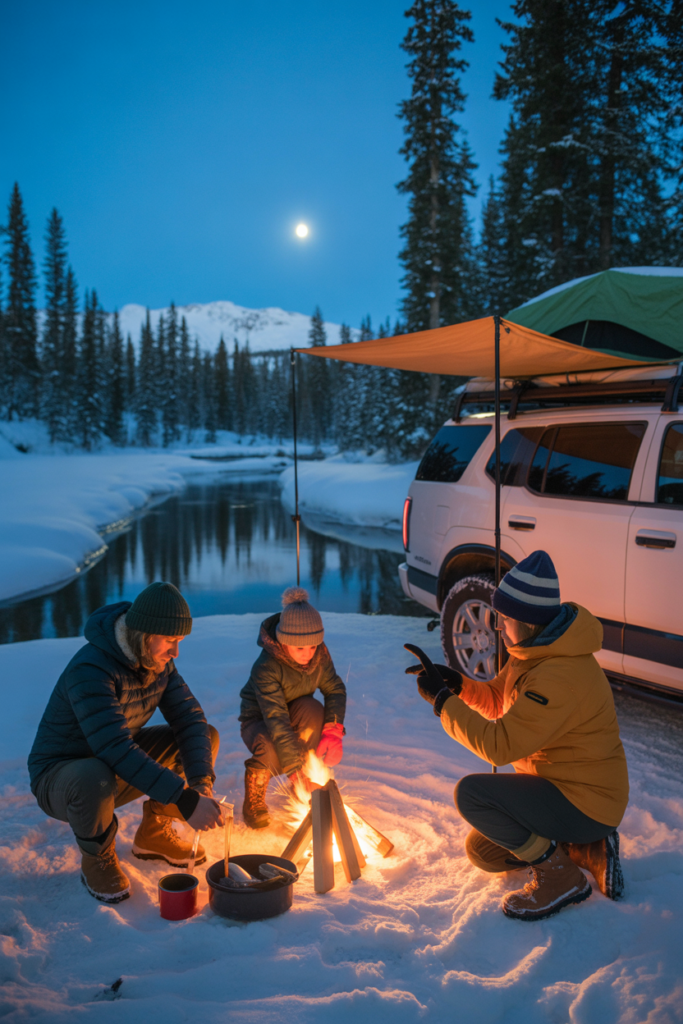
Kids stay warm by moving, not by wearing bulky clothing. In winter environments, overly heavy or restrictive clothing limits kids play time, increases sweating, and leads to faster chilling once movement stops. Families often over-layer kids out of fear, not realizing that mobility is one of the most important warmth factors. A thoughtful winter clothing system allows children to explore, play, and engage with their environment safely. When kids are comfortable, they build their confidence in cold settings instead of associating winter with discomfort or restriction. Daytime activity isn’t just about playing, it’s about circulation, morale, and mental health. Winter road life works best when families lean into the season rather than hide from it. The right supplies make snow a feature, not a barrier.
Clothing systems must allow mobility without bulk and support outdoor engagement.
Non-Bulky Clothing (Layered)
Base Layer:
- Merino wool or synthetic thermal tops and bottoms
- Moisture-wicking socks
Mid Layer:
- Lightweight insulated jackets
- Fleece pullovers
- Softshell pants
Outer Layer:
- Waterproof, windproof jackets
- Insulated snow pants
- Gaiters for snow protection, waterproof, durable covers worn over the lower leg and boot top to seal out snow, ice, and mud, and water
Accessories:
- Insulated waterproof gloves
- Wool hats
- Waterproof winter boots with removable liners
Safety & Comfort Supplies:
- Hand and foot warmers
- Sunglasses for snow glare
- Sunscreen (winter UV exposure
- Lip balm and skin cream
- Extra dry clothing sets per child
Daytime Activity Essentials:
- Nature scavenger list
- Snow-safe tools for digging and building
- Insulated seating pads
- Backpack with snacks and warm drinks
Kids stay warmer when they’re moving comfortably. Bulky clothing restricts play and leads to cold exposure faster.