Imagine this: you’ve spent months planning the perfect family getaway. The kids are buzzing with excitement, the dog is in the backseat, and the truck is loaded with everything you think you’ll need. You arrive at the campground, and the ‘perfect setup’ you researched online suddenly feels like a tight squeeze. The teardrop camper looked cozy in the photos, but your kids are bumping elbows in the sleeping area. The kitchen space is barely big enough to prep a meal, and every step feels cramped. Or maybe your truck camper setup seemed rugged and functional, but after a week of traveling, you noticed the storage isn’t as adequate for the bikes, gear, and toys you hoped for. What should be fun and relaxing suddenly feels irritable and uncomfortable. This scenario is more common than most families realize, and it all comes down to choosing a setup that truly matches your family’s lifestyle.
The decisions you make now ripple through every part of your trip-from meal prep to sleeping arrangements-and if you misjudge your needs, even small tasks can feel frustrating. But it doesn’t have to be this way. I’ll be sure to show you exactly how to choose a camper or truck setup that works for your family.
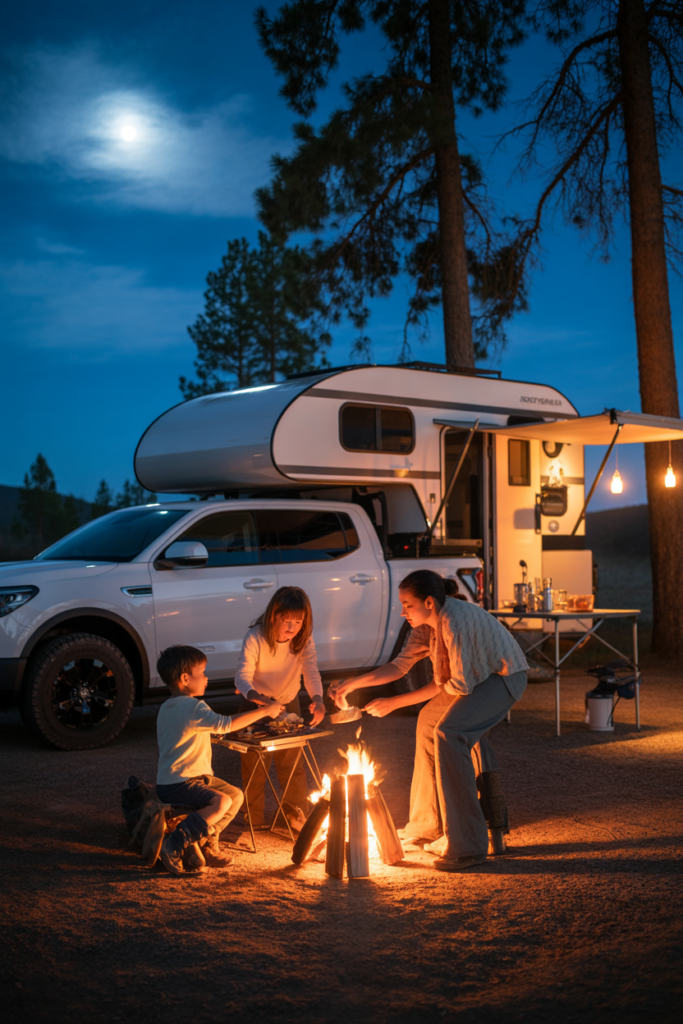
Living Space Requirements for Families
When considering any camper or truck setup, start with your space. Families often underestimate how much room they actually need, which can turn what should be a relaxing trip into a logistical headache
Sleeping Arrangements
Consider whether your kids need bunk-style sleeping or if fold-out options are sufficient. Age differences and the need for personal space matter more than you think. Even a cozy camper can feel cramped if you do not account for movement or privacy needs.
Kitchen & Meal Prep Space
Cooking is a major part of family camping. Even a small galley in a Teardrop Camper requires thoughtful planning. Counter space, storage for utensils, and enough room for two people to cook at the same time all impact how enjoyable mealtime is. Without enough space, simple tasks like flipping pancakes or boiling pasta can feel chaotic, irritating, and insufficient.
Bathroom Facilities
Some campers have compact bathrooms; others rely on campground facilities. Consider your family’s tolerance for shared spaces and how accessibility affects evening and morning routines.
Storage & Organization
Your gear multiplies quickly. Bikes, ski equipment, hiking gear, toys, and even extra clothing need their own spots. Poor storage leads to clutter, difficulty finding items, and a sense of irritation.
I remember our first trip with a small camper. Excitement quickly gave way to frustration; kids tripped over backpacks, and the stove barely accommodated two pans, and even small tasks like pouring cereal became cumbersome. The midjudged space added strain to meals and bedtime, and it was not fun. A clear plan for a realistic living space would have prevented that.
Tip:
Create a family blueprint: map out sleeping areas, kitchen workflow, and storage needs before buying or renting. Think beyond aesthetics-focus on daily usability.
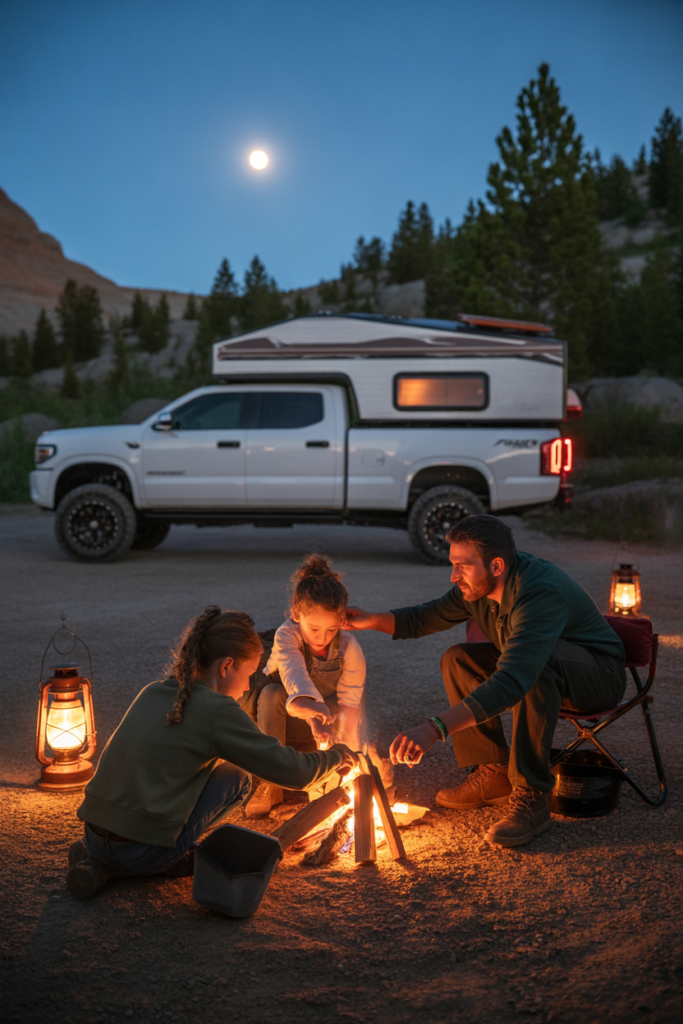
Layout Mistakes That Cause Frustration
Even a well-sized camper can feel cramped if the layout doesn’t work. These mistakes are easy to overlook, but they can dramatically impact your trip.
Avoid These Common Pitfalls:
- Overestimating Storage Capacity-“It’ll fit.” rarely works when you have more than one kid, plus a dog and gear.
- Ignoring The Flow-Cooking, cleaning, and moving between sleeping and living areas should flow naturally. Without this, every task feels like a chore.
- Midjudging Weight Distribution-Improperly loaded trucks or campers affect handling, fuel efficiency, and safety.
- Skipping Real-Life Testing- Pictures rarely reveal low headroom, narrow aisles, or tiny drawers in a camper.
On one trip, our small galley forced us to constantly bump into each other while cooking. Simple tasks became frustrating, and the evening lost its relaxing vibe. Every action required extra effort, reaching, bending, maneuvering, and it all could have been avoided with the thoughtful layout planning.
Tip:
Before committing, walk through the layout. Measure in your garage to simulate the space the camper uses. Then measure out or use your family to pretend you are walking by each other in the space. Imagine where you would be cooking and try to visualize where your stuff would be.
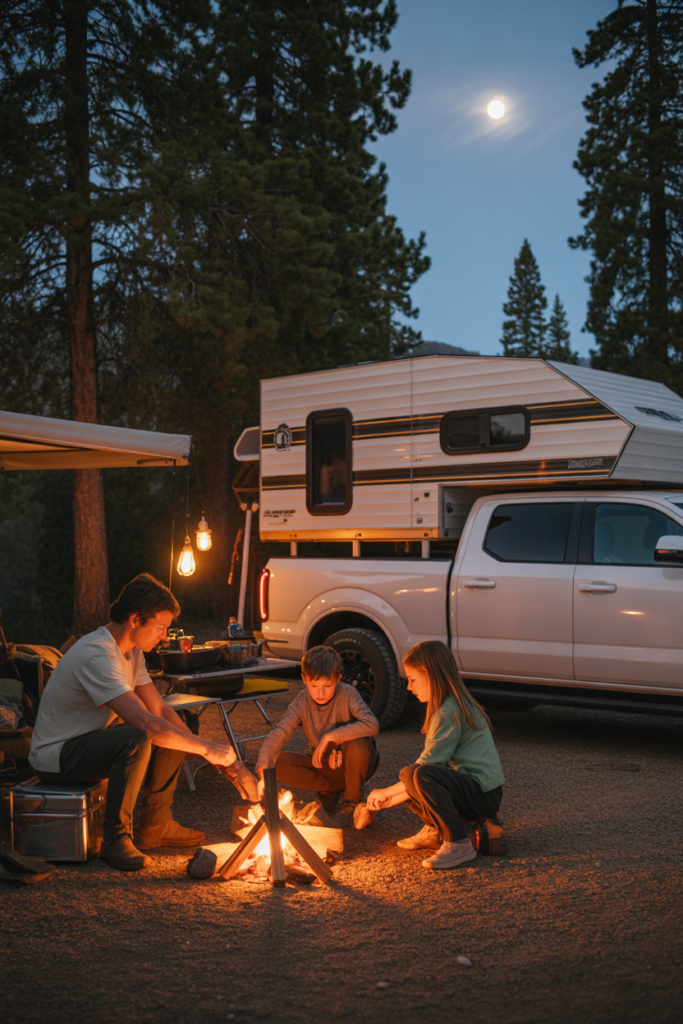
Matching Setup to Lifestyle & Travel Needs
Even the perfect vehicle size and layout will not help it the setup does not align with your family’s travel lifestyle.
Consider How you Travel:
- Weekend warrior vs long term explorers: Weekend trips can get you by with less storage and sleeping space, but longer trips need fully functional kitchens, ample storage, and comfortable sleeping areas.
- Travel & Towing: A rugged 4×4 truck may be necessary for mountainous or remote areas, while a compact teardrop camper works well in maintained campgrounds
- Adventure: Families who bike, kayak, or ski need storage that’s quick to access. Families focused on downtime may prefer more living space and a larger awning.
After realizing that, after a few frustrating trips in a small teardrop camper, we switched to a truck camper. Suddenly, mornings flowed smoothly, meal prep was easier, and the kids had space to move around freely. Aligning the vehicle to our lifestyle transformed the trip from not so much room to a comfortable and engaging trip.
Tip:
Make a checklist of your family’s needs: Number of travelers, your activities, meals, trip durations. Evaluate each potential setup against your checklist. If it does not meet every requirement, change it or plan what would work for you.