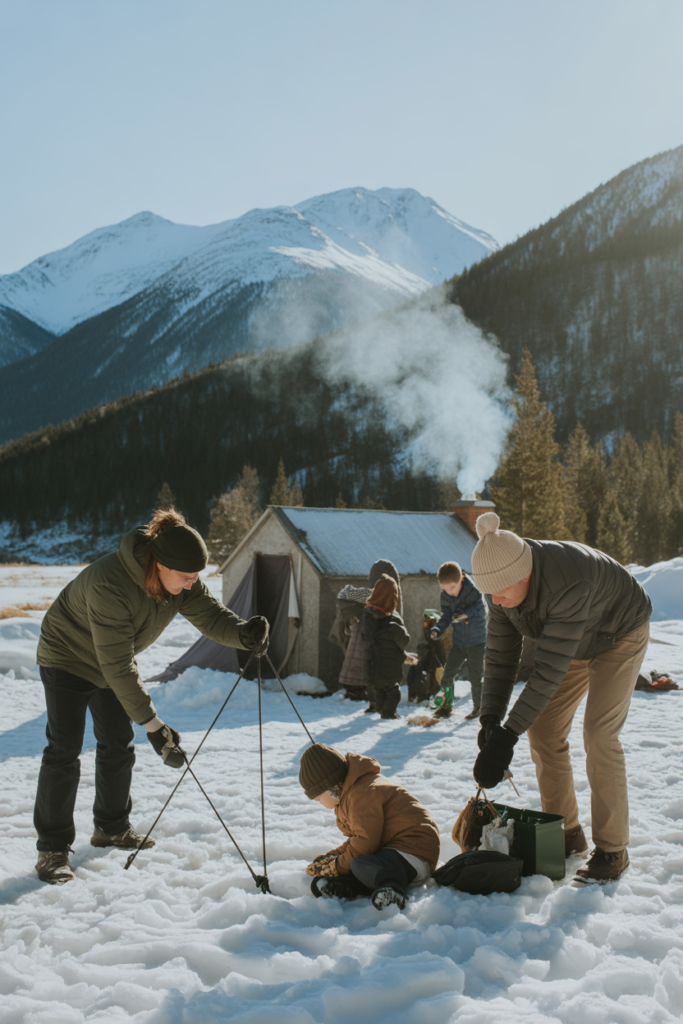
Why Order Matters More in Cold Conditions
Cold weather removes your margin for error. In warmer seasons, setting up camp out of order might cost you comfort. In Freezing conditions, it costs time, energy, and body heat.
When temperatures drop, your body works harder just to stay warm. Every unnecessary step-digging through gear, repositioning equiptment changing locations – drains energy faster than you realize. That is why cold-weather campsite setup order matters more than the gear you bring.
The Priority Should always follow a simple sequence
- Block wind and moisture
- Create a protected space
- Establish warmth
- Organize for Comfort
If you start with comfort items or cooking gear before shelter, you end up rushing the most important steps later – usually when your hands are cold, and daylight is fading.
Cold camping success comes from decisions made early, not effort spent later.
Setting Up Shelter in Snow and Wind
The first physical task at a cold-weather campsite should always be shelter, even if you plan to leave again to gather wood or scout the area.
Wind increases heat loss dramatically. Snow introduces moisture, which is even more dangerous when combined with cold temperatures. Your shelter creates a controlled environment where everything else becomes easier.
When setting up Shelter in Snow and Wind:
- Choose a spot out of direct wind, even it it sacrifices a view
- Pack down the snow before pitching to prevent sinking overnight
- Secure guylines immediately-wind often increases after sunset
- Orient your entrances away from the prevailing wind
Do not fully unpack until your shelter is standing. Once your shelter is up, you have a place to warm your hands, regroup, and continue setting up without panic.
Shelter first creates stability. Everything else builds from there.
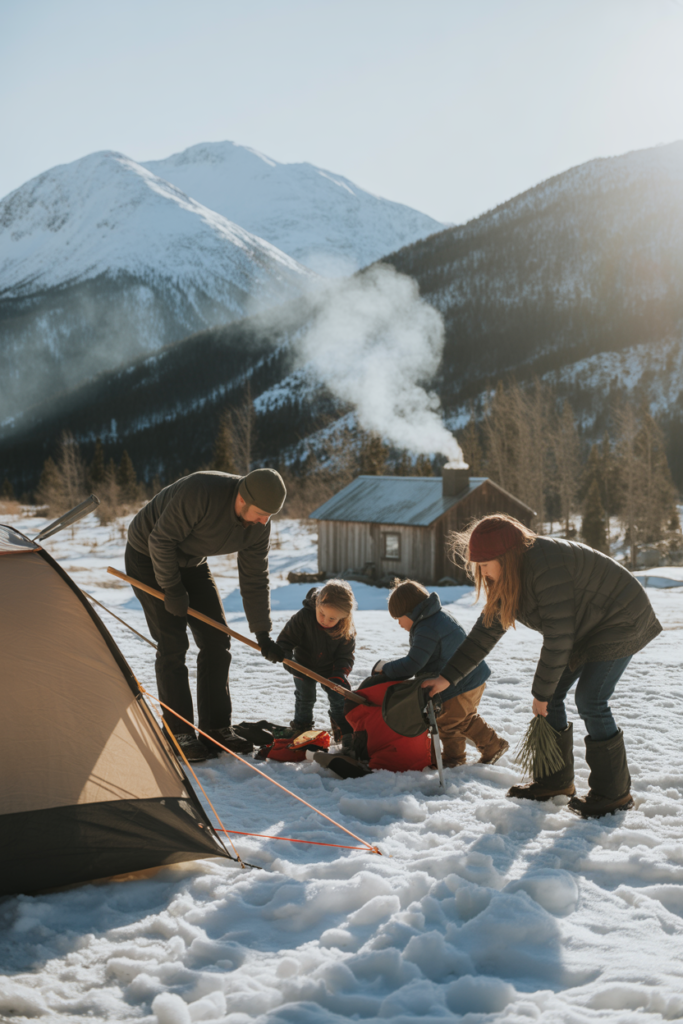
Fire, Wood, and a Warm Flow
Fire comes after shelter, not before. Once you have wind protection, warmth becomes the next priority, but it needs to be done efficiently.
In cold weather, fire is not just about heat. It is about maintaining a steady warmth flow without exhausting yourself.
Best practice is to gather more wood than you think before lighting the fire. Cold temperatures burn fuel faster, and repeated trips for wood pull heat from your body.
A Functional warmth flow looks like this:
- Wood gathered and staged nearby
- Fire placed downwind from your shelter
- Your Heat directed toward your main activity area
- Minimal movement once your fire is established
A Good fire setup reduces movement, conserves energy, and keeps the campsite functional after dark.
Planning Cold Weather Trips Without Overpacking
Cold-weather trips often lead to overpacking because people prepare for every possible scenario. The result is clutter, slower setup, and more stress, specially when the temperatures are low
The goal is not more gear. The Goal is Intentional layers and systems.
Instead of packing duplicates, pack by function.
- One complete sleep-warmth system
- One active camp system
- One true backup layer per person.
This approach keeps your gear manageable, setup is faster, and your teardown is simpler-all critical when your mornings and evenings are cold.
Planning ahead prevents overpacking, and overpacking is one of the biggest hidden problems in cold-weather camping.